




EVERY popular car changes over the decades. Usually they grow bigger, a bit flabbier, more powerful, better packaged and safer.
Some car manufacturers manage this process of change better than others.
For instance, a Volkswagen Golf still looks like a Golf, even though the differences between the first one and the latest are like night and day.
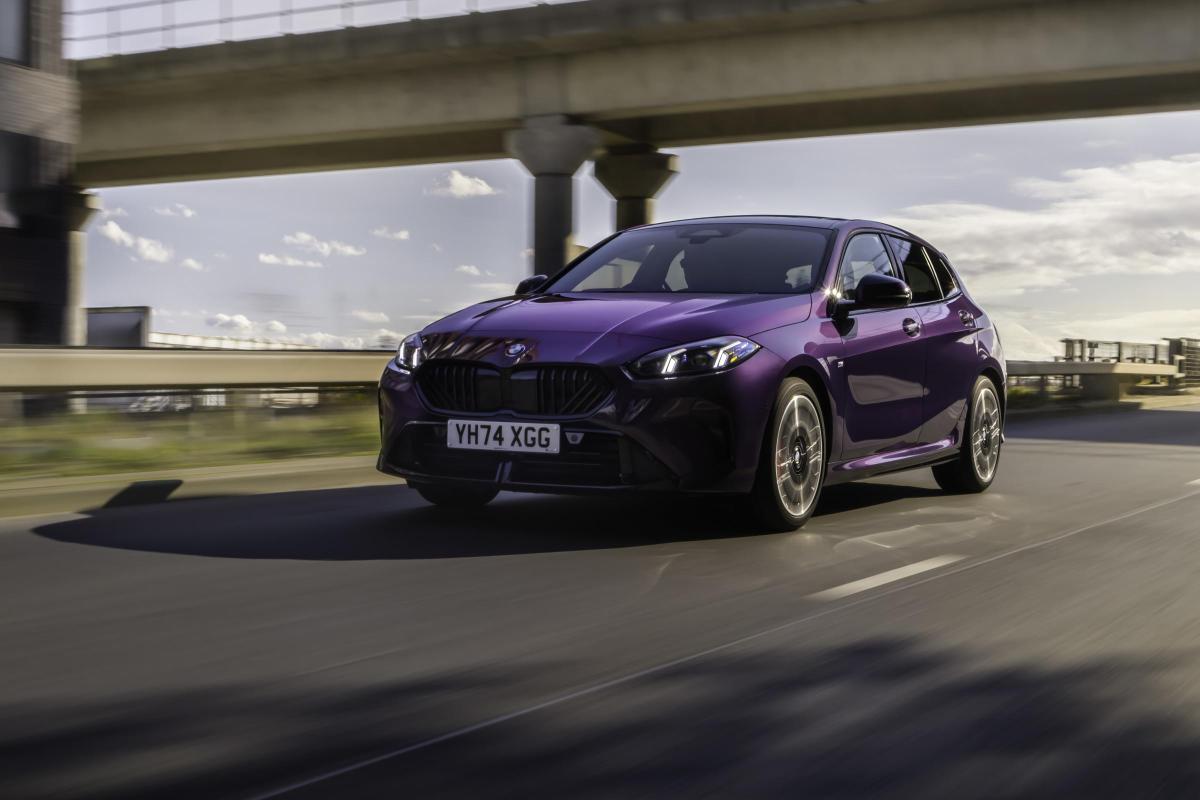
In profile, the latest BMW 1-Series still looks like its predecessors.
But beneath the skin everything changed with the third generation – and the evolution continues with the fourth.
BMW spent 15 years trying to make buyers accept a rear wheel drive/hatchback layout in a market sector filled with front drivers. Unusually for BMW, its efforts to convince the public came to naught.
So with the third generation the German giant made the switch to a front-wheel drive platform but some buyers still think the 1-Series is rear wheel drive (including the BMW delivery driver who dropped the test car off for me and swore the vehicle he was handing over was pushed, not pulled).
But this fourth generation is most definitely a front driver (unless, of course, you opt for four-wheel drive). Beneath the sleek skin, it shares its architecture with the MINI Countryman and the 2-Series.
It’s a testament to BMW's hard work to give this car the same ‘feel’ you get in something like a 3-Series that some people swear it’s still rear wheel drive.
There are good reasons for switching to front drive, though, not least in the interior packaging where the lack of a transmission tunnel liberates far more legroom for rear seat passengers compared to the 1-Series’ predecessors.
But rear wheel drive gave the 1-Series a unique selling point compared to its rivals like the Audi A3 and the Mercedes A-Class. Does the switch to front wheel drive mean the fourth generation 1-Series is just another premium hatchback?
Well, yes… and no.
BMW may have given up and gone with the flow in this class but that doesn’t mean it hasn’t engineered in that unique ‘ultimate driving machine’ DNA that makes its cars so popular with UK drivers.
It reckons the 1-Series is “the pioneer of driving pleasure in the premium compact segment” and, for once, that’s not just marketing speak.
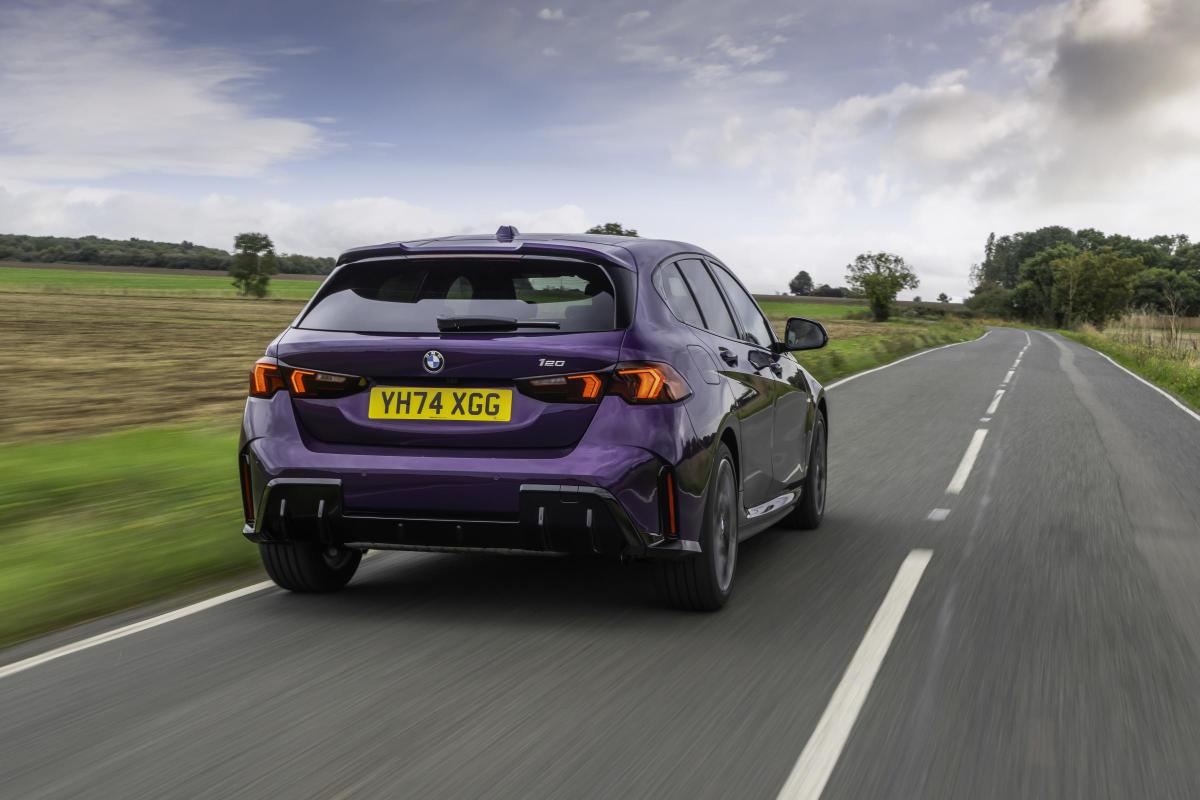
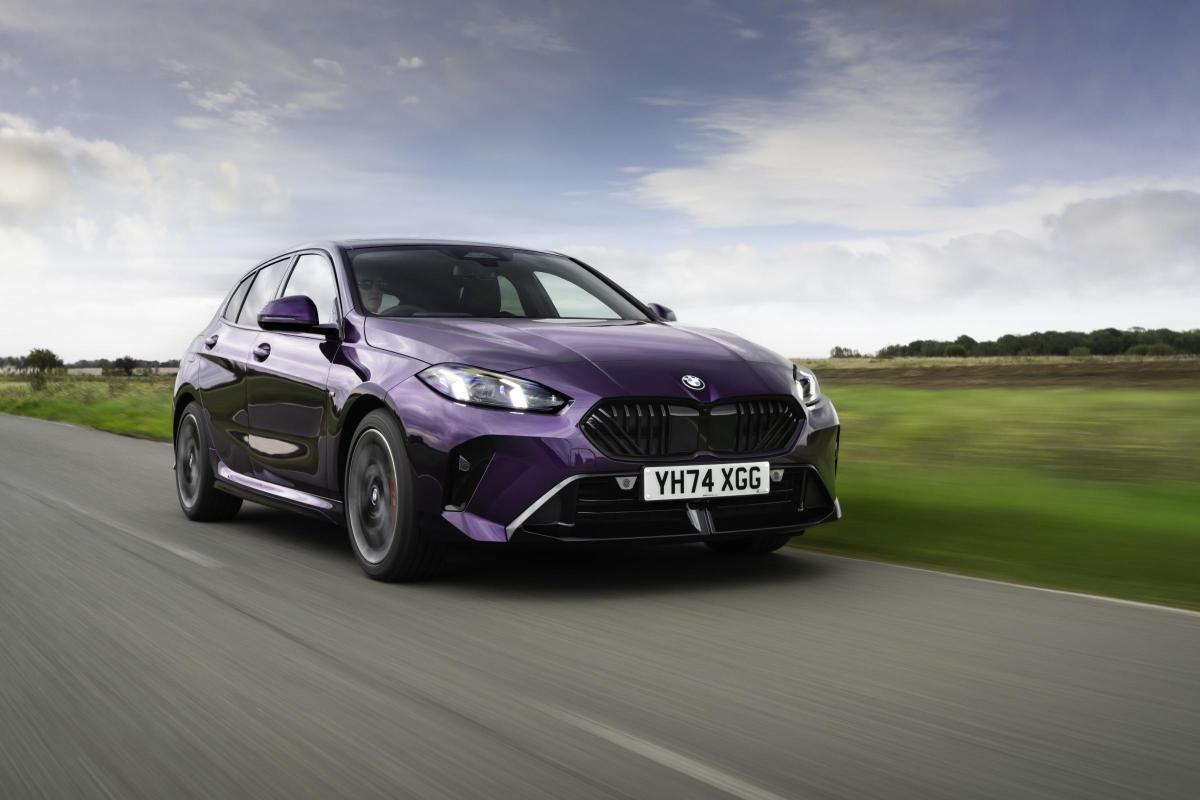
Upgrades over the third generation include a new 48 volt mild-hybrid petrol power-train, a stiffer chassis, tweaked suspension, a better interior and sharper exterior style. It looks great fitted with the M-Sport body-kit, long and low with a bigger front air dam and (fake) air diffuser at the rear. The long-serving kidney grille is the dominant feature seen from the front – you can be under no illusion that this is anything other than a BMW.
The M-Sport model (the favourite choice among UK buyers) also comes with firmer suspension, a lowered ride height, more sophisticated dampers and a faster steering rack.
Despite the 120 badging you won’t find a 2.0-litre engine beneath the sculptured bonnet. Instead, there’s a three-cylinder variant of the B38 modular engine which displaces 1.5-litre.
Why three-cylinders and not four? Because a three can be made to produce fewer exhaust emissions than an engine with four cylinders.
The modular design means the B38 can be made with three, four and six cylinders. Each cylinder measures 500cc and every B38 engine features all alloy construction, a turbo, direct petrol injection and variable valve timing. The turbo is unusual because it is made from aluminium rather than steel and is water (not oil) cooled. This makes it a third lighter than a traditional turbo.
Because three-cylinder engines suffer from vibration issues, BMW has fitted a balancer shaft which rotates at twice the crankshaft speed. Automatic models also have a multi-stage damper. Acoustic shields also double as thermal insulators, helping the powerplant reach the optimum operating temperature as quickly as possible.
The same three-cylinder engine can be found in the i8 electric supercar and various iterations of the MINI.
This powerplant is mated to a 20bhp electric motor housed within the seven-speed dual clutch gearbox for a combined output of 168bhp and 207 lb/ft. That’s marginally less power than the previous 120 but you wouldn’t guess from its performance on the road. It accelerates swiftly and smoothly to the legal limit where it cruises in a fuss-free manner. If you select the Sport mode the engine exhaust note sounds a bit fruiter (thanks to an artificial sound programme which pipes the burbles through the car’s speakers) and the gear changes are remapped to make the whole car feel a bit quicker.
The car’s handling is very good; the chassis corners flat, there’s plenty of grip from the wide tyres and the suspension deals with mid-corner bumps in a fuss-free manner. There’s not a lot of suspension travel, though, and bigger bumps can send a shudder through the chassis, but that’s the price you pay for exceptional body control. Turn-in from the steering is quick and precise. Keen drivers will approve. The 120 may be front wheel drive but it goes like a BMW should.
The hybrid battery does impinge on the boot space a bit and, at 300 litres, the 120 isn’t a class-leading example of a mid-size hatchback. However, the cabin is much better packaged. There’s more room for the driver and three adults without the rear passengers needing to get better acquainted.
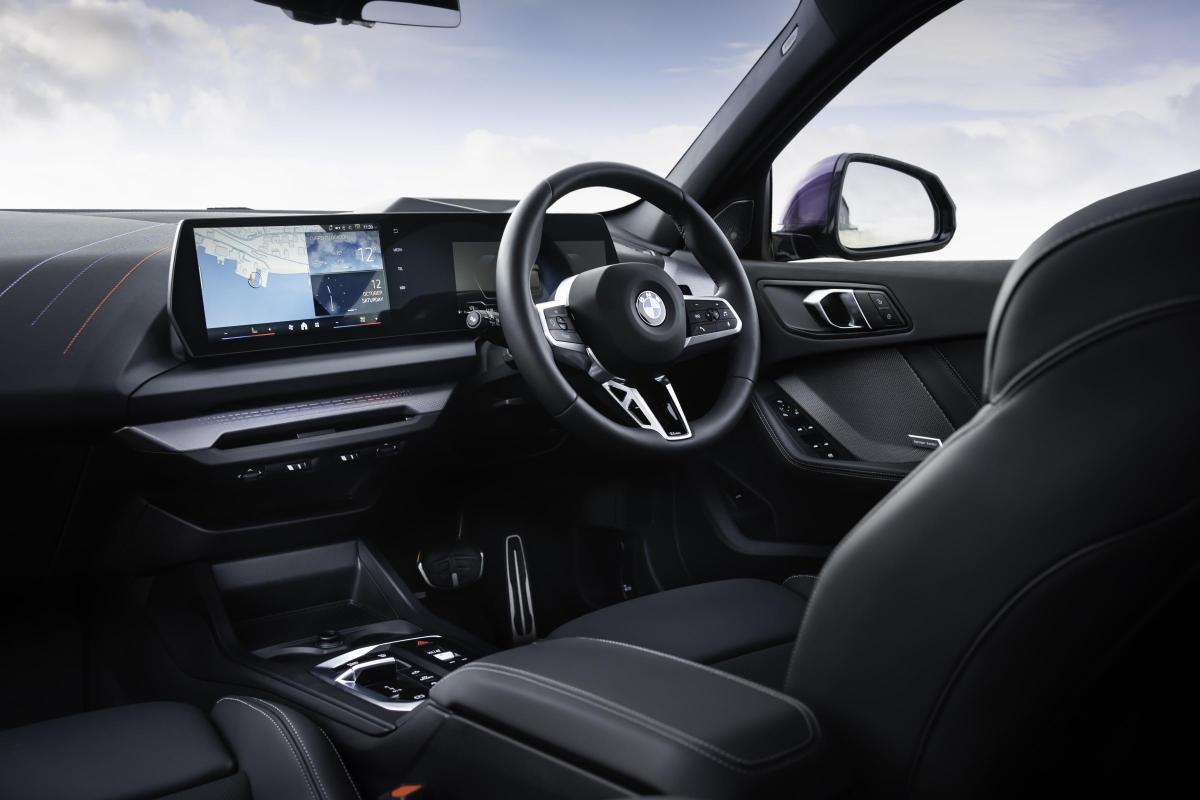
Sadly, many of the old physical controls and switches have been deleted. These controls are now to be found as part of the flat-screen LCD which gentle curves towards the driver. At least the user interface is straightforward, key controls are on permanent display and the system responds pretty much the instant you stab the capacitive screen. It’s a shame BMW opted to delete the control wheel, though.
The M-Sport leather steering wheel is a delight, as is the coloured stitching on the dashboard, and there are new ambient lighting features which change according to the driving mode selected.
The driving position is very comfortable – I like to be reclined with my arms and legs outstretched and it was pretty much perfect for me – and there’s a broad range of adjustment in the wheel and driver’s seat.
Having rationalised the range, 1-Series ownership now starts at more than £30,000. That’s a considerable sum but on a par with rivals from Audi and Mercedes. The M Sport trim level adds bigger alloys (18-inch plays 17-inch), that lovely sports steering wheel, a subtle body kit, heated seats part-covered in Alcantara.
Does the fourth generation 1-Series still have the BMW X factor? Or has the switch to front wheel drive and mild-hybrid assistance made it just another premium hatchback?
Rest easy BMW fans. The 1-Series is still the driver’s choice in the premium hatch sector. Plus ca change?


Share